Distributed intelligence
Thinking now lives across people, models, data, and workflows. The system—not the isolated mind—is becoming the new unit of intelligence.
DCOGNITION
Ideas for redesigning intelligence, expertise, and institutions in the age of AI.
01 Humanity’s third great revolution
The Agricultural Revolution made food abundant. The Industrial Revolution amplified human muscle. The Cognitive Revolution is scaling cognition and reorganizing the intelligence through which civilization itself is designed and governed.
02 The thesis
AI is not simply transforming the economy. It is reorganizing intelligence, expertise, and institutions. The challenge is not merely to regulate models or protect jobs, but to redesign markets, institutions, and governance for cognition distributed across humans and machines.
Thinking now lives across people, models, data, and workflows. The system—not the isolated mind—is becoming the new unit of intelligence.
When answers become abundant, judgment becomes scarce. The edge moves from knowing the most to orchestrating, evaluating, and deciding well.
The decisive organizations will not bolt AI onto yesterday’s architecture. They will redesign how intelligence, authority, and learning flow.
Open Intelligence Press · 2026
03 The book
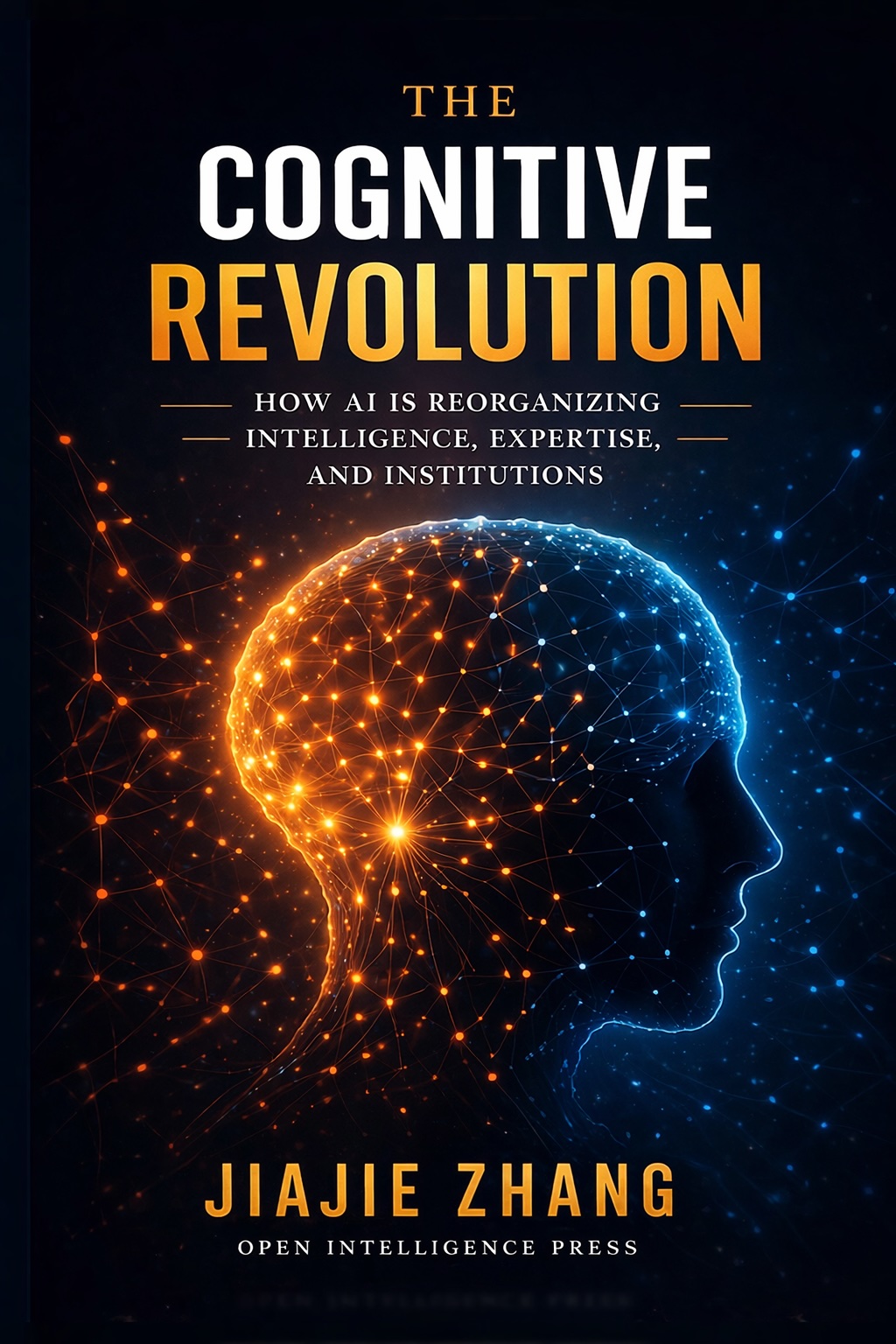
The Cognitive Revolution reframes the AI era as a structural transformation in how cognition is produced, distributed, scaled, and governed.
The book makes the argument. This platform keeps it alive—testing, extending, and applying it as the world changes.
04 The living platform
Start where you are. Read the long argument, follow a sharp idea, watch a public talk, or listen on the move. Every format returns to the same question: what must be redesigned now?
AGI mistakes a historically narrow form of intelligence—the isolated performance of the individual mind—for intelligence itself. The real frontier is not stand-alone machine intelligence but the design of distributed intelligence.
Author’s Note: This essay is adapted and expanded from Chapter 6, From Tool to Medium in my book, The Cognitive Revolution: How AI Is Reorganizing Intelligence, Expertise, and Institutions. While the book develops the broader theoretical framework, this essay focuses on one practical question every leader should be asking: How do you know whether your organization is truly becoming AI-native?
Education still assumes knowledge is scarce and intelligence is individual. Both assumptions have expired.
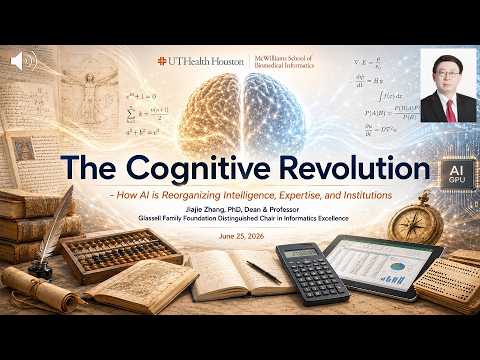
Featured video · 2026
A public introduction to how AI is reorganizing learning, work, discovery, and institutional life.
Watch the talkPodcast series
Audio essays on distributed intelligence, policy, education, medicine, and the institutions that must come next.
Explore selected audio Cognitive scientist · Author · Institution builder
05 The perspective
Jiajie Zhang studies how minds, machines, and institutions think together. His work has moved from the origins of distributed cognition to the urgent design questions of the AI era.
A cognitive scientist, dean, and professor, he earned the world’s first PhD in Cognitive Science under Donald A. Norman at UC San Diego. He is an elected Fellow of AAAS, ACMI, AIMBE, AMIA, and IAHSI.
Follow Jiajie Zhang on LinkedInThe next era will not be led by the people who use the most AI.