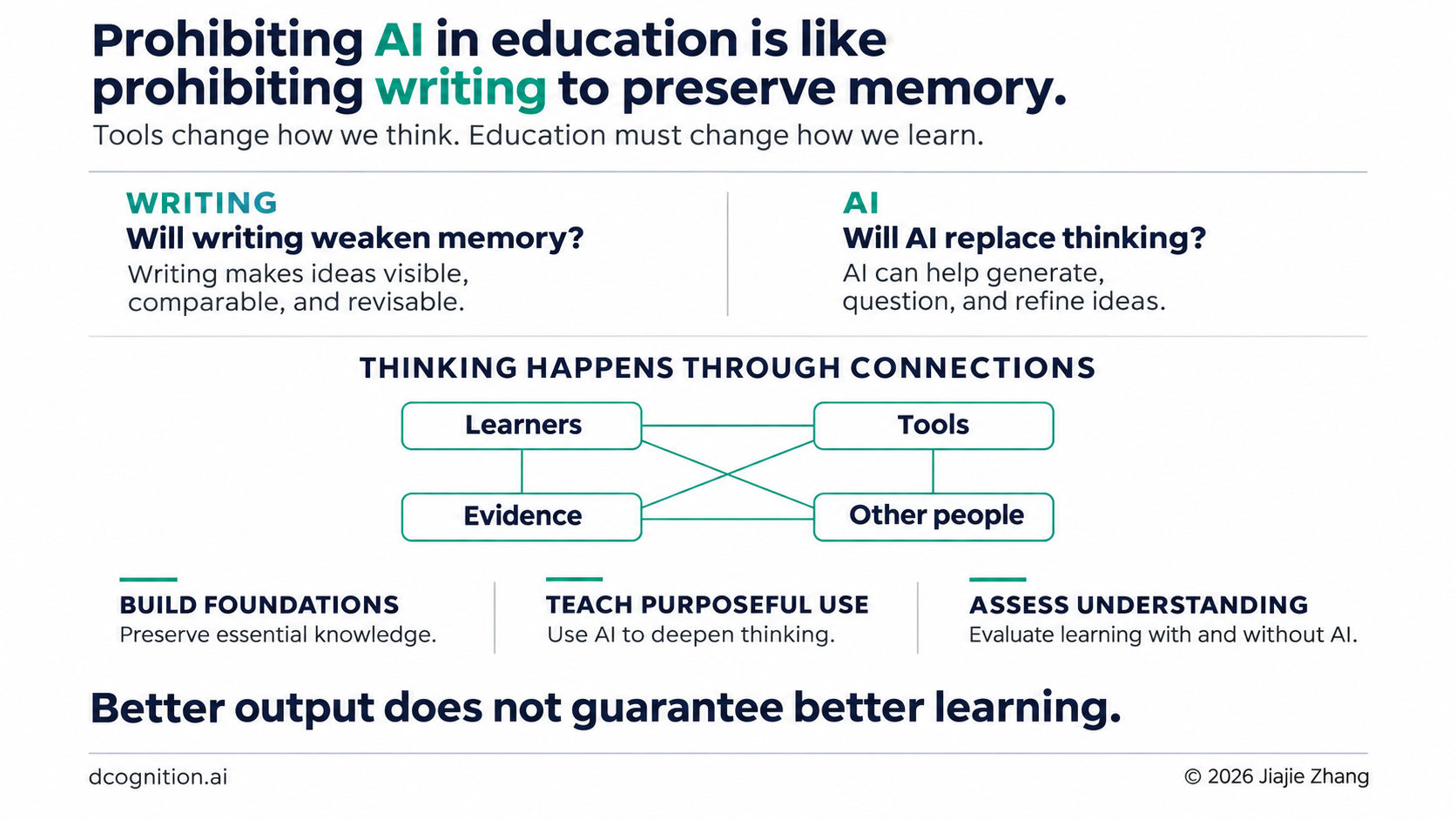
Prohibiting AI in Education Is Like Prohibiting Writing to Preserve Memory
Banning AI can preserve a familiar practice while preventing students from learning how to think through a new one.
04 Essays
12 essays extending the book across distributed cognition, leadership, education, institutional change, policy, and scientific discovery.
12 essays
Banning AI can preserve a familiar practice while preventing students from learning how to think through a new one.
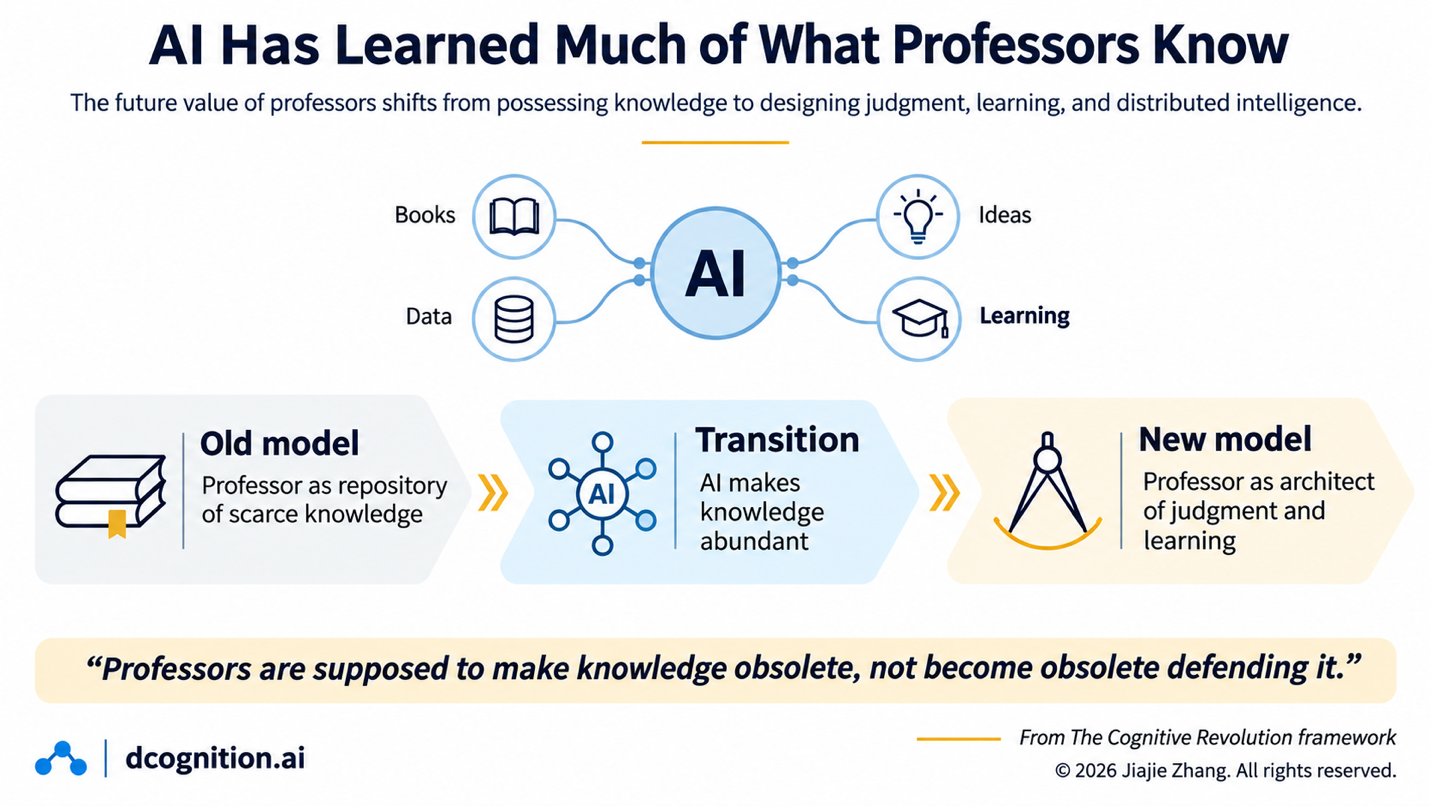
AI does not need to replace professors to reorganize the value of academic expertise. The work must change before the role becomes ceremonial.
AI-and-employment debates usually assume a fixed task list and ask what machines can do. This essay argues that AI changes the list itself. Anthropic’s nursing example shows why: some work remains human, some is augmented or automated, and new work emerges. Distributed cognition explains the shift: tasks arise from relationships among people, representations, technologies, and institutions. As AI becomes a medium for generating, analyzing, and revising information, institutions must redesign work, expertise, education, responsibility, and the distribution of economic gains.
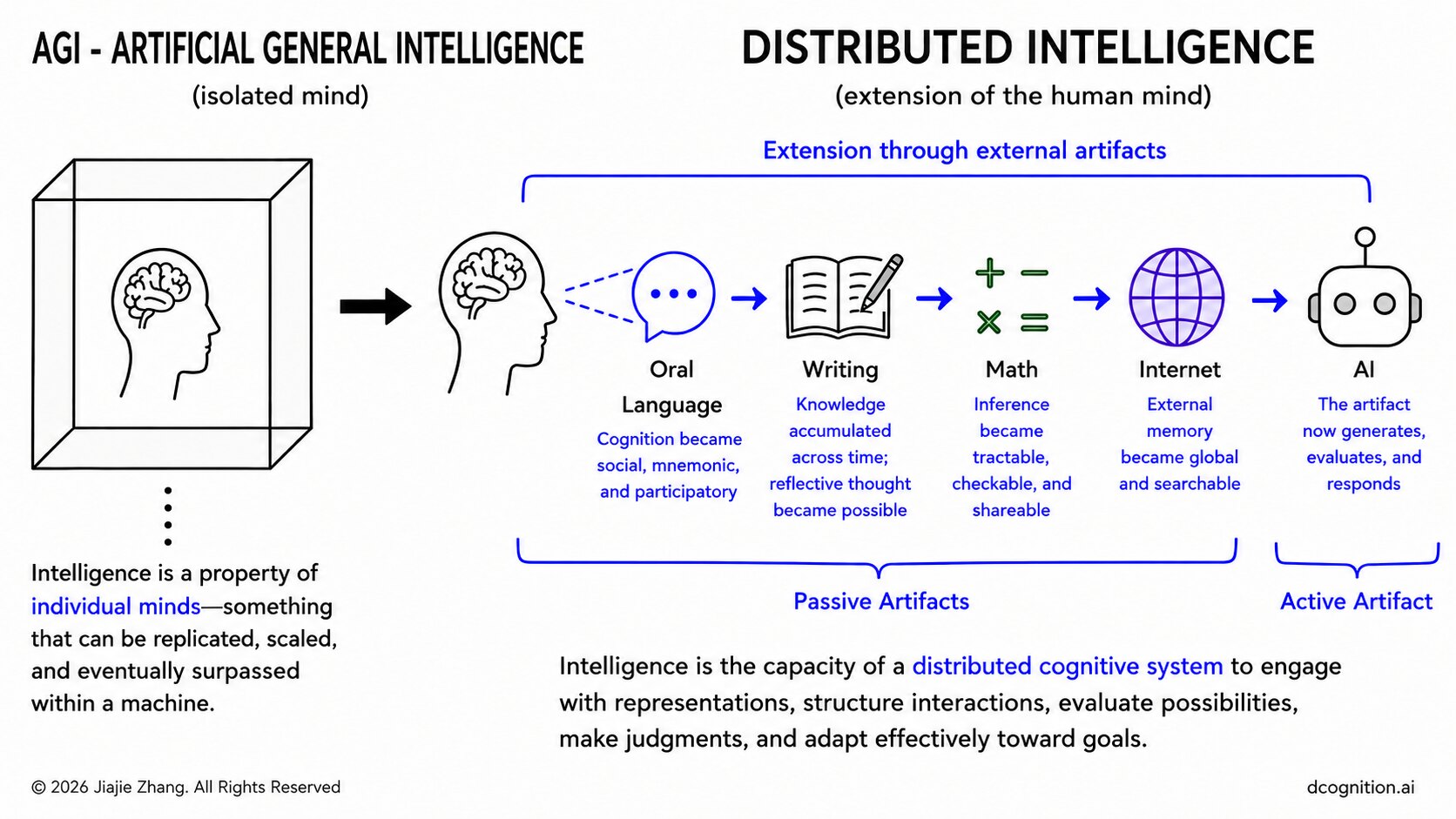
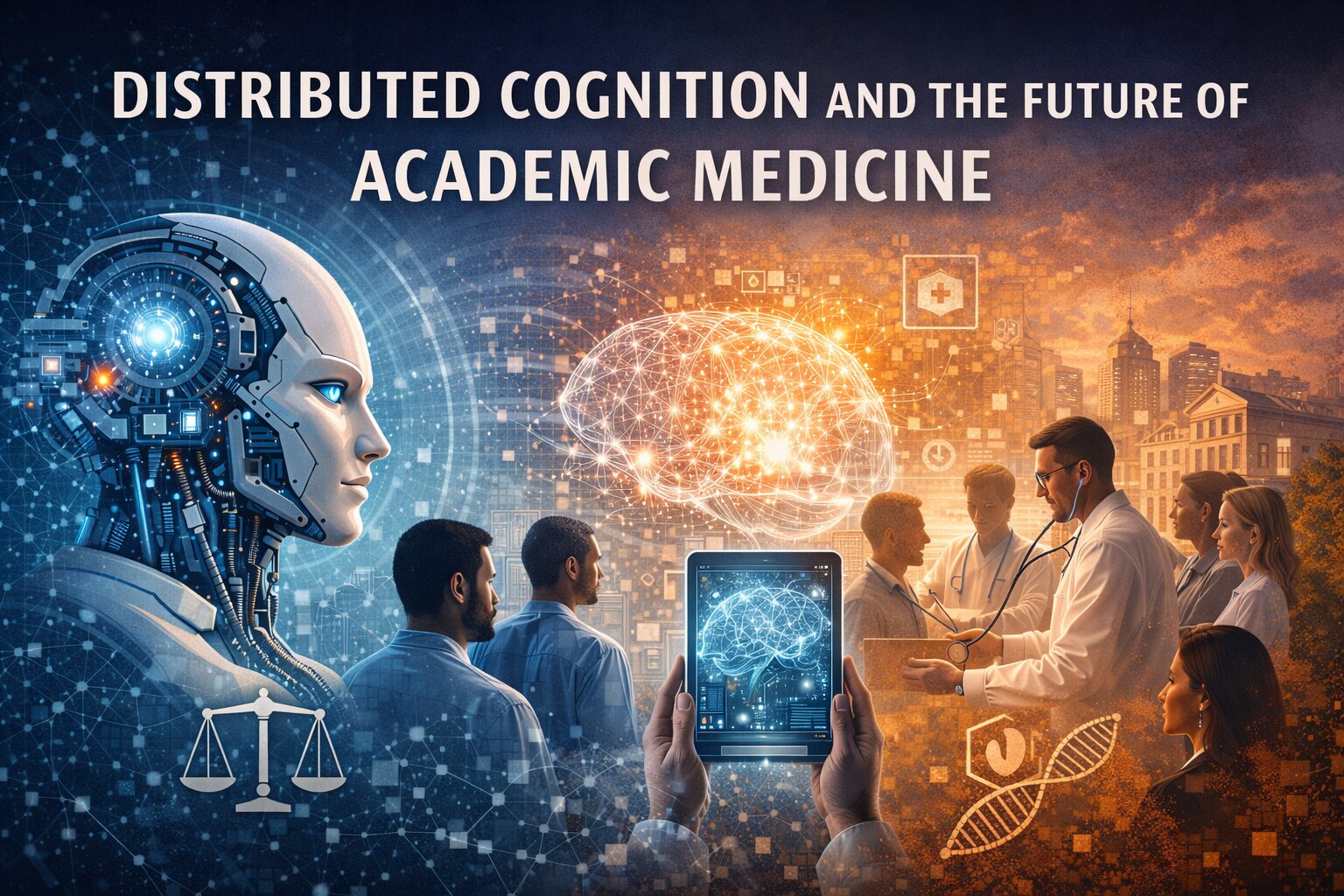
Read essayAGI mistakes a historically narrow form of intelligence—the isolated performance of the individual mind—for intelligence itself. The real frontier is not stand-alone machine intelligence but the design of distributed intelligence.
If AGI is a category error, then what are frontier models actually doing? They are computationalizing distributed intelligence, bringing cognitive work once distributed across people, documents, tools, software, and institutions into active human-AI systems, shifting the critical question from whether AI crosses an AGI threshold to how we design these systems while preserving human judgment, authority, validation, and accountability.
Author’s Note: This essay is adapted and expanded from Chapter 6, From Tool to Medium in my book, The Cognitive Revolution: How AI Is Reorganizing Intelligence, Expertise, and Institutions. While the book develops the broader theoretical framework, this essay focuses on one practical question every leader should be asking: How do you know whether your organization is truly becoming AI-native?
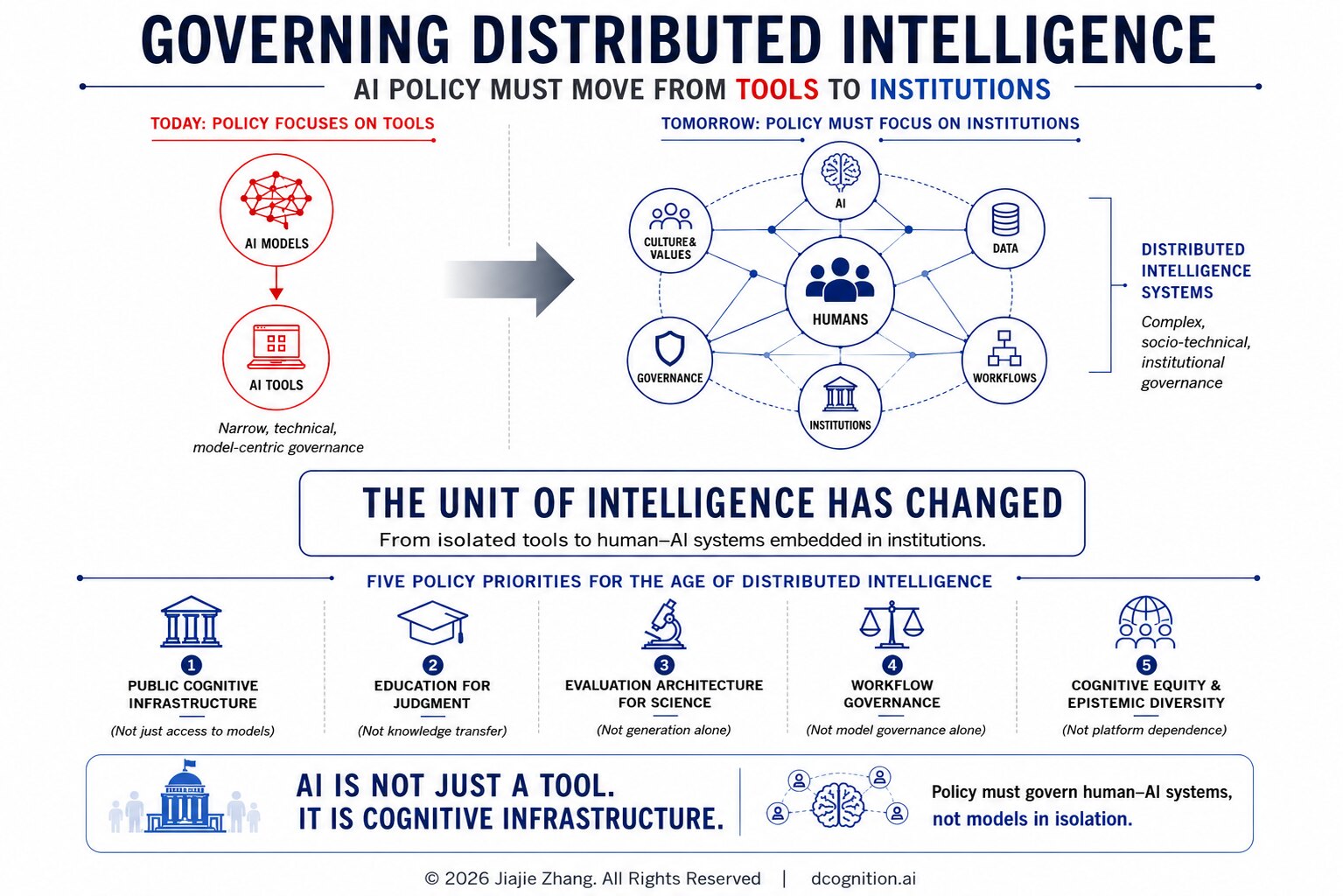
Read essayAI policy must move from regulating models in isolation to redesigning institutions around distributed intelligence.
Education still assumes knowledge is scarce and intelligence is individual. In the age of AI, learning has to be redesigned for human–AI systems.
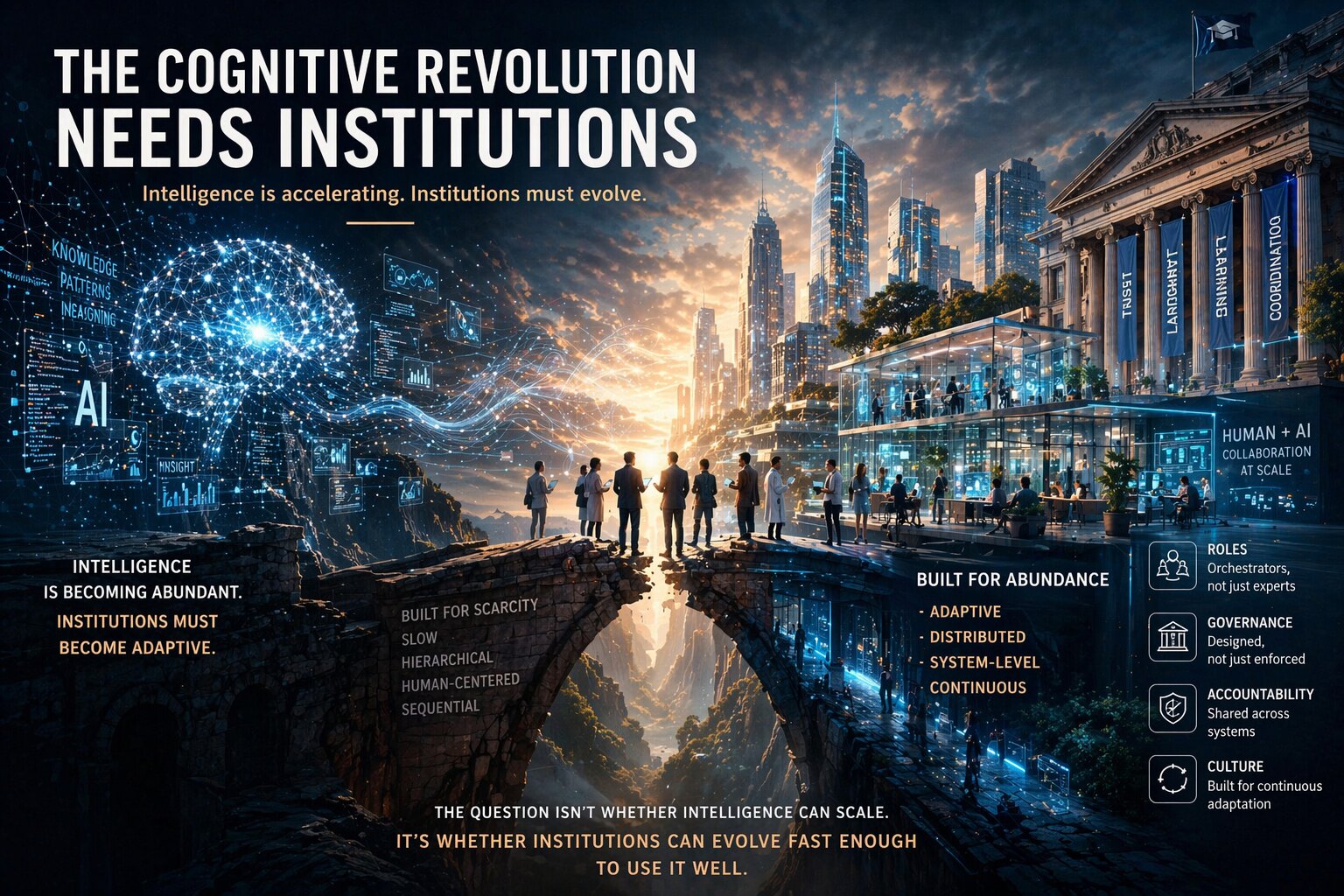
When cognition becomes distributed across people, tools, and systems, institutions built on older assumptions face a structural redesign problem.
The challenge of AI is not only technical. It is whether institutions can reorganize quickly enough to absorb new forms of intelligence.
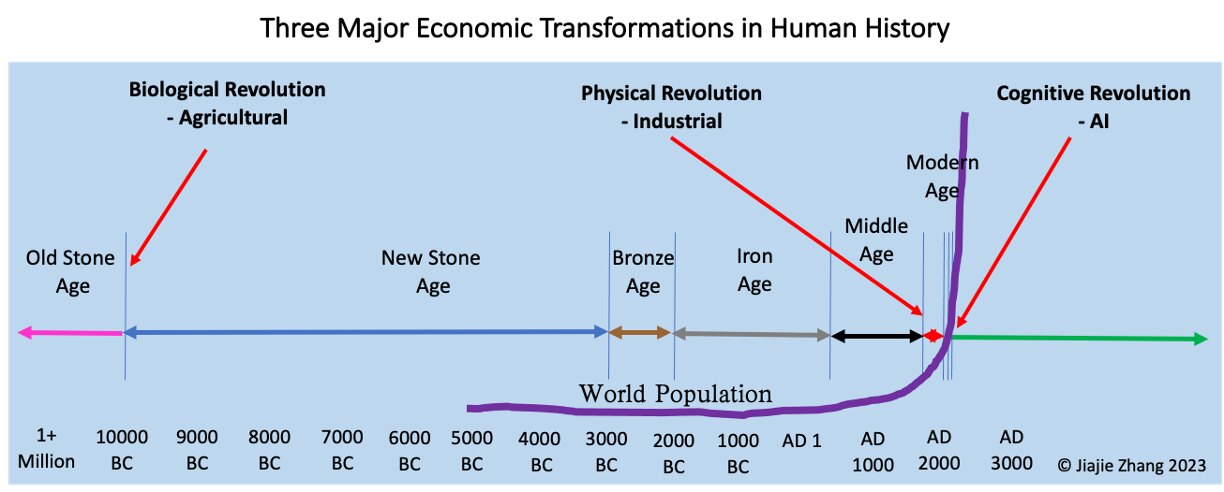
A macro-level framing of AI as the next great shift in how societies generate value, following the agricultural and industrial revolutions.
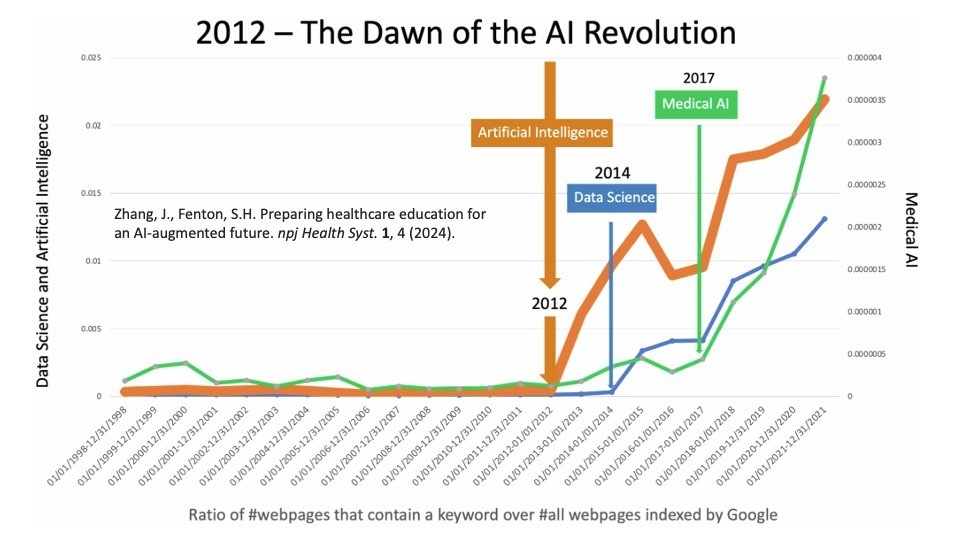
A historical analogy for understanding why foundational breakthroughs in AI matter the way engine innovations mattered to the industrial age.